
Vision Pro and Apple’s Strategy - Digital Explorers' Diary #61
Episode #61 - Apple’s strategy with the Vision Pro
Welcome to the Digital Explorers’ Diary, a curated collection of thought-provoking topics about interactive technologies, AI, web3, sense-making, entrepreneurship, and psychology.
Executive summary:
- Apple’s strategy with the Vision Pro – Why I think Apple’s marketing strategy is a masterclass and why my opinion differs from most Mixed Reality technology “experts.”
- Visual Turing Test - What is it, and how far are we?
- Asgard's Wrath 2 - An excellent triple-A Virtual Reality game.
Apple’s strategy with the Vision Pro
Notes: for clarity, I use “Mixed-Reality/MR“ as an umbrella term for Augmented, Virtual, and Mixed Reality and AVP as a shortcut for Apple Vision Pro.
The Apple Vision Pro was released on February 2nd in the US. Expectations are high from the Mixed-Reality/tech community, who are eager to see if the AVP delivers on its promises. But more importantly, from a consumer market point of view, are we seeing the beginning of a massive shift where MR headsets finally find their mass market usage?
Remember: even if MR technologies are already widely used in many fields, they are still to find their mass market adoption for the average customer. It’s even more true for headsets, that are still a niche market. Even when non-tech people try a headset, the most common reaction is in the range of “That’s cool, but I won’t use it every day. And not outside in the street.”
I’m hammering it every time in this newsletter: the user experience is the most important aspect one should focus on, regardless of the quality or novelty of the technology. Since the AVP announcement, Apple has communicated almost only on simple usages of the headset: watching a movie, using apps on 2D windows placed in 3D space, and watching spatial videos. A huge contrast from the other players, such as Meta, where complex 3D apps are the most pushed forward.
From a technical point of view, Apple’s strategy looks very weird. The headset is expensive, heavy, and slow to release, and Apple focuses on usages that require only a fraction of the computing power the AVP offers. The video below highlights this perfectly.
But that prism is missing the bigger picture. Apple is not targeting a narrow usage for the AVP. They want to change the game, and the AVP is the first step in a grand strategy that will unfold over many years.
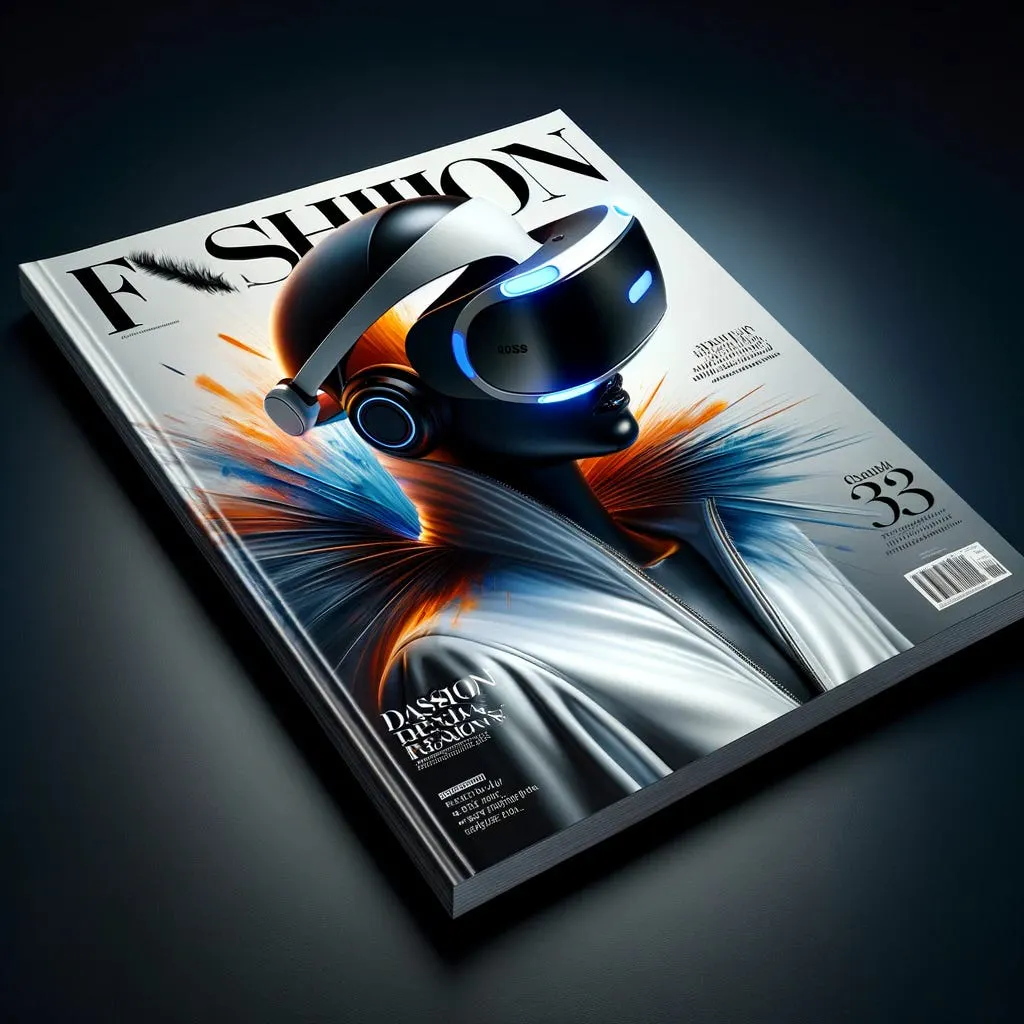
Just look at this cover. Technology is irrelevant. It’s the usage, the new step in lifestyle. It’s not for geeks anymore. Marketing masterclass. And Apple is the only headset manufacturer that also carries the fashion styles. Wearing an AVP in public will not be weird, it will be an act of fashion.
Computers, smartphones, tablets, watches… What’s next for Apple? Headsets are, and it all starts with Spatial Computing. Apple knows that the best way for a technology to be adopted widely is to start small, with experiences that do not radically change everything and that are, on top of that, accessible, intuitive, and seamless to use.
What is Spatial Computing? It’s simply doing the same thing that you’re doing every day on a computer, but spatially all around you, in the environment you are in. Pictures, browsing, calls, movies… It’s far from Meta’s “let’s play fencing in Mixed Reality” use case.
This strategy is working: the AVP is all over the news, and even if it has many defaults, the awareness is spreading. Many applications are already available, converted to “spatial.” Movies with Disney+, shopping with Decathlon, and sports with the NBA are just a few examples of many.
Also, let’s face it: we, the MR pioneers and tech enthusiasts, would have loved to “make it” to mainstream adoption from the fantastic experiences that already exist on these devices. Alas, we didn’t, and we’re a bit jealous that Apple is on the way to success.
Let’s swallow our pride and welcome this new wave of attention that MR is getting; let’s share our experience with all the newcomers and enjoy the new road ahead!
Are you new to this and want to know more? Reach out here or on LinkedIn to brainstorm with me!
Visual Turing Test
The Visual Turing Test is the point a which Mixed Reality becomes indistinguishable from reality. How far are we? Quite far, actually. In this fascinating conference, Douglas Lanman from Meta discusses the strategies that VR headset manufacturers are exploring to reach that goal. Let’s dive in:
- The first pillar is comfort: weight, position, and pressure on the head and face. Comfort is also visual: removing the distortions of the video pass-through or the ability to wear prescription glasses.
- The second is realism: colors must be high-fidelity, occlusions must be perfect, and the field of view and resolution must match the human eye.
Apple, Meta, HTC, or Varjo, all the tech giants are working on improving all these features, but it won’t be years until we reach such high fidelity!
Asgard's Wrath 2
Asgard’s Wrath 2 is a VR game bundled with the latest Meta Quest3.
- With a duration of ~60 hours, this is an excellent game; the universe is rich and can be explored many times with different characters.
- After being betrayed by Loki, we follow our hero through Egypt, where you must collaborate with the ancient gods and learn to be one yourself.
- The gameplay is very easy to learn, and the interactions are natural, such as using weapons and fighting opponents.
This is a huge recommendation if you want to try a VR game!
From the Podcast
Every week, I’m teaming up with Guillaume Brincin and Sébastien Spas on the Lost In Immersion podcast. This week:
- Meta For Work - Meta released a new communication campaign around how Mixed Reality can be used for work. Workrooms - as seen in the screenshot below, meetings, training, learning, collaboration; the applications are various and accurate, but we couldn’t help seeing this “gimmicky” feeling of the demos and videos, and even if the title mentions Mixed Reality… All the examples are VR!
Also, we wonder if Meta is finally finding its position as the cheap, open alternative to Apple - the Android of iOS?
Meta Workrooms - Google Lumiere - The research teams at Google have released an impressive - in theory - model for video generation and styling. As usual, the primary questions are whether this model will be as performant as advertised and how it will be distributed - will it be through API or ChatGPT-style interface on Bard, and at which price? Google Lumiere
- Microsoft Mesh - The virtual reality meeting solution is now globally available through Microsoft Teams. You don’t need a VR headset to access Mesh; it will work from any platform, but that raises an interesting comparison with the Apple Vision Pro. Assuming you want to join a meeting on Mesh on your Meta Quest, you’ll have to select the app in the Quest, join the meeting, log in again, and maybe forget your password, etc. On the Vision Pro, we’re sure accessing a meeting will be seamless, and switching from Macbook to iPhone to the AVP will be a bundled feature, and the first reviews coming up seem to confirm it! Microsoft Mesh
Watch the podcast below, and tune in at 10 am UTC on Tuesdays on Twitch, and listen to the podcasts on Youtube, Spotify, Apple Podcasts, Google Podcasts, or Amazon!
Did this newsletter spark some ideas? There are a lot of ways we can work together:
- A quick-fire, 30-minute brainstorm with me - book it here!
- We can ideate, prototype, and build your experiences - contact us here!