Matsuya Ginza
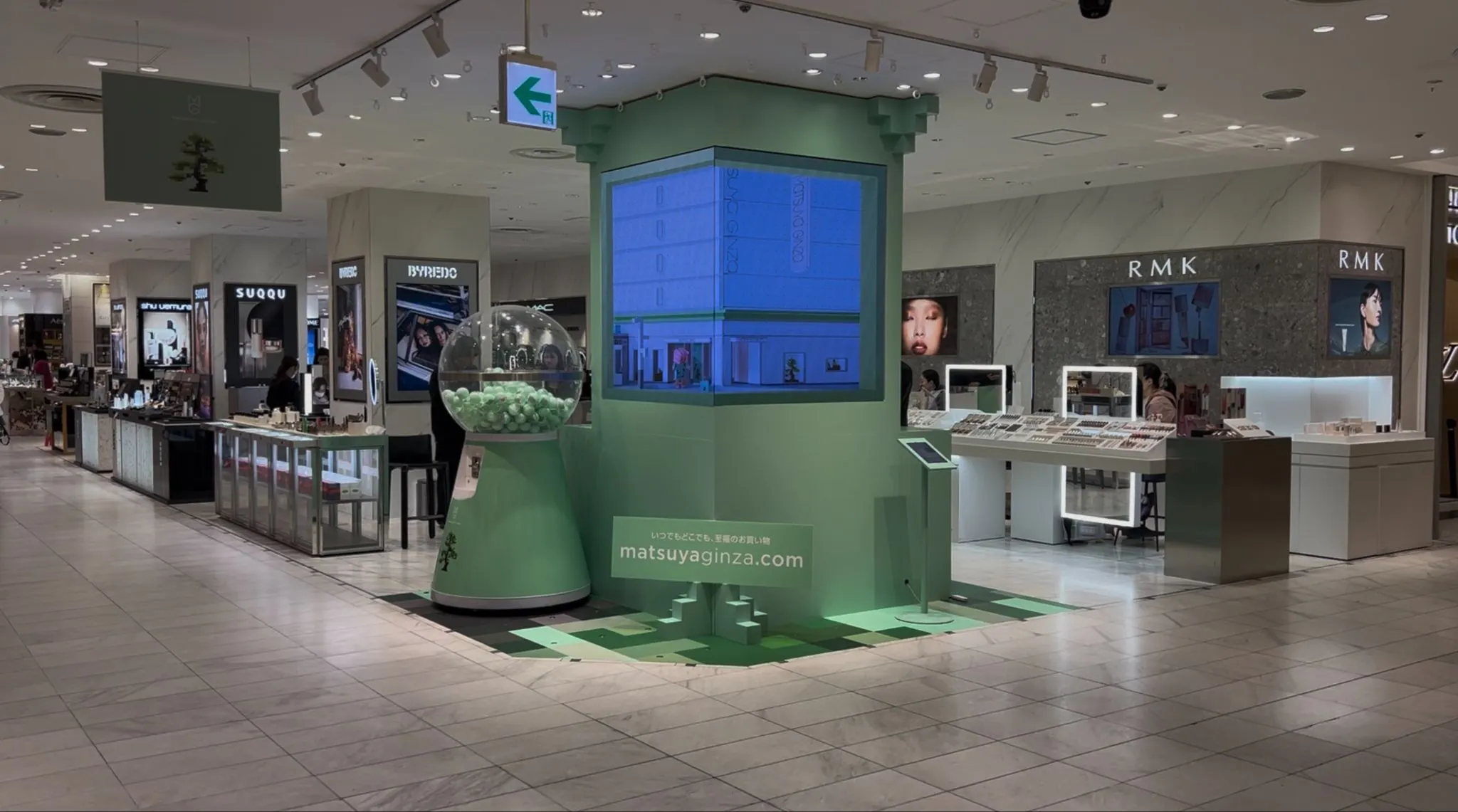
Matsuya Ginza was opening matsuyaginza.com, and the customers most likely to shop there were already walking the floors of the store. We designed and produced five days of activations across two floors: LED screens, a pop-up store, a giant gatcha machine, display windows, and a set of digital experiences that all ran through a signup on the new site.
The customers Matsuya Ginza wanted for matsuyaginza.com were already in the building. They were walking the floors, buying from the counters, and had no particular reason to stop and create an account for an online store that had not existed the week before.
So the launch had to reach them there. Five days, two floors, the middle of the Christmas trade, and a house that had never asked its customers to sign up for anything digital.
Everything on the floor led to the same place. The gatcha machine, the beauty cart, the character you dropped onto the window screen, the wish you left on the B1 window: each one was a QR code that opened matsuyaginza.com and asked you to sign in or sign up before it would do anything.
We designed that journey end to end, from what catches your eye across a busy floor to what is on your phone thirty seconds later, and built it to integrate tightly with the e-commerce website so an account created at a display window was a real account on the new store, ready to buy from.
We also built the tool the floor staff worked from. A brand ambassador could look a customer up and see whether their gift had already been handed over, which is what kept the giveaways straight across five days, two floors and several activations running at once.
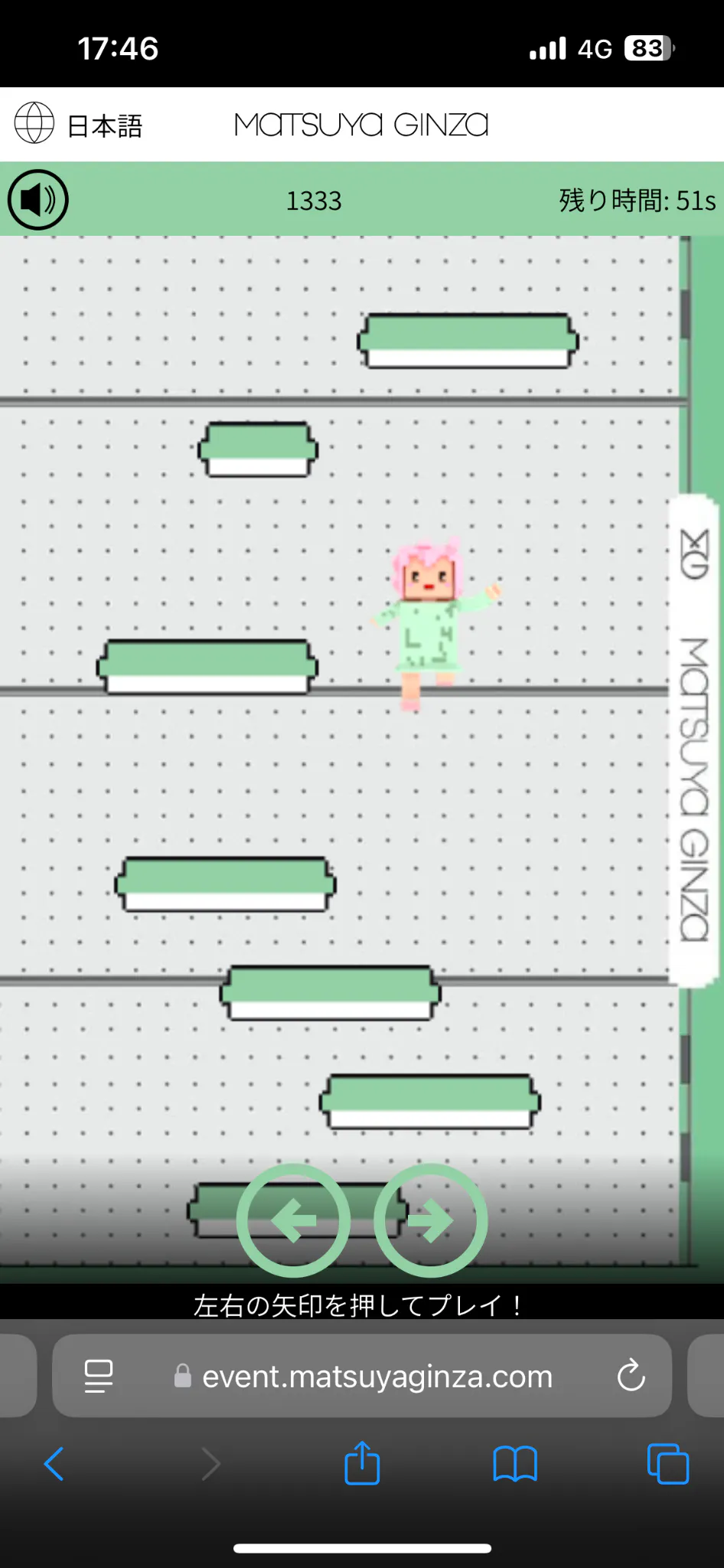
Matsuya is written 松屋, the pine shop, and the campaign logo was a pine tree built out of pixels. We built the mobile game around it: one screen, one rule, a score you could improve by playing again, and a daily leaderboard. It ran in the browser, so there was nothing to install between scanning a code in the store and playing.
It was played 80,000 times. We re-checked the counter three times before sending the number to the client, because it did not look real.
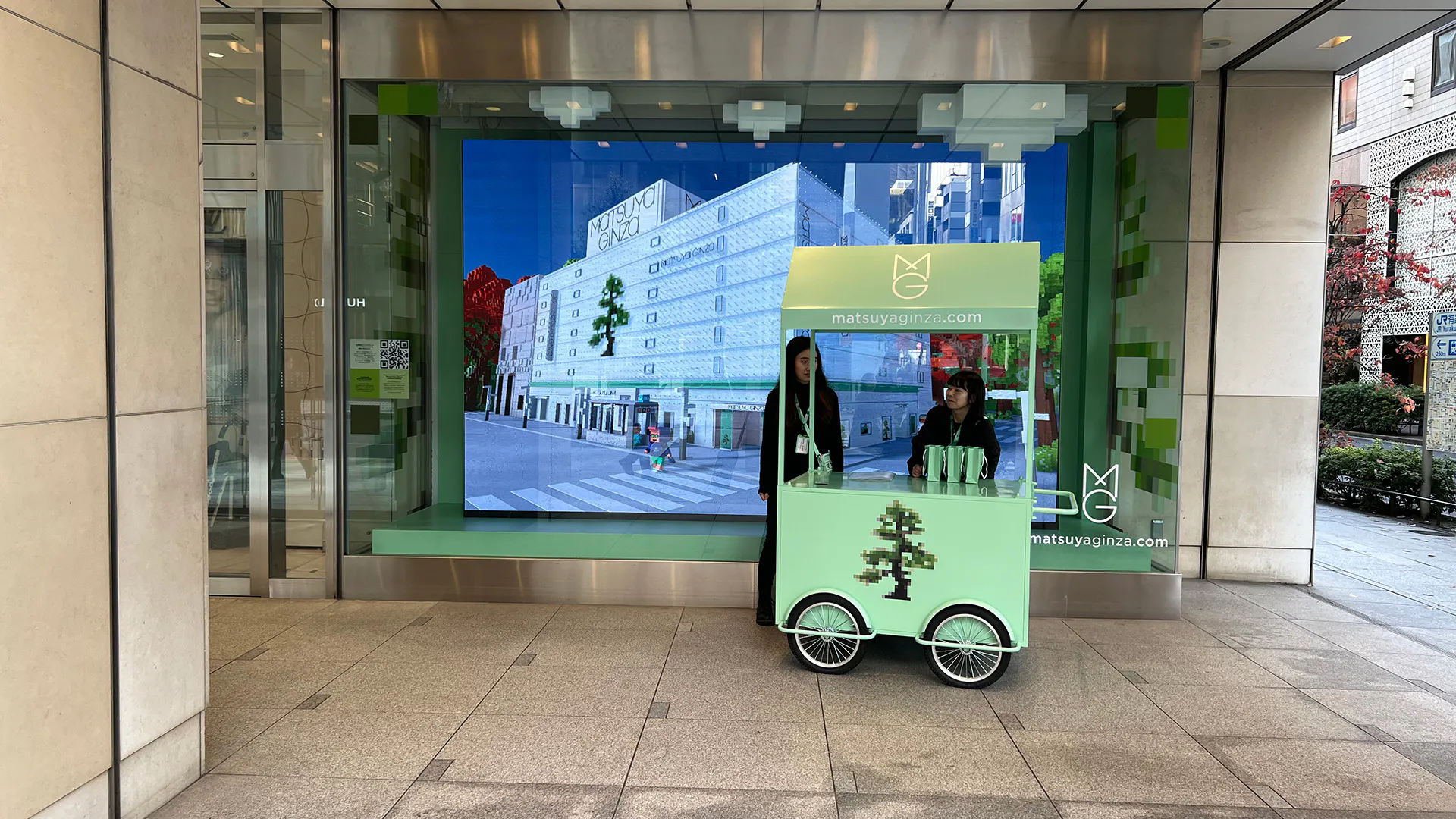
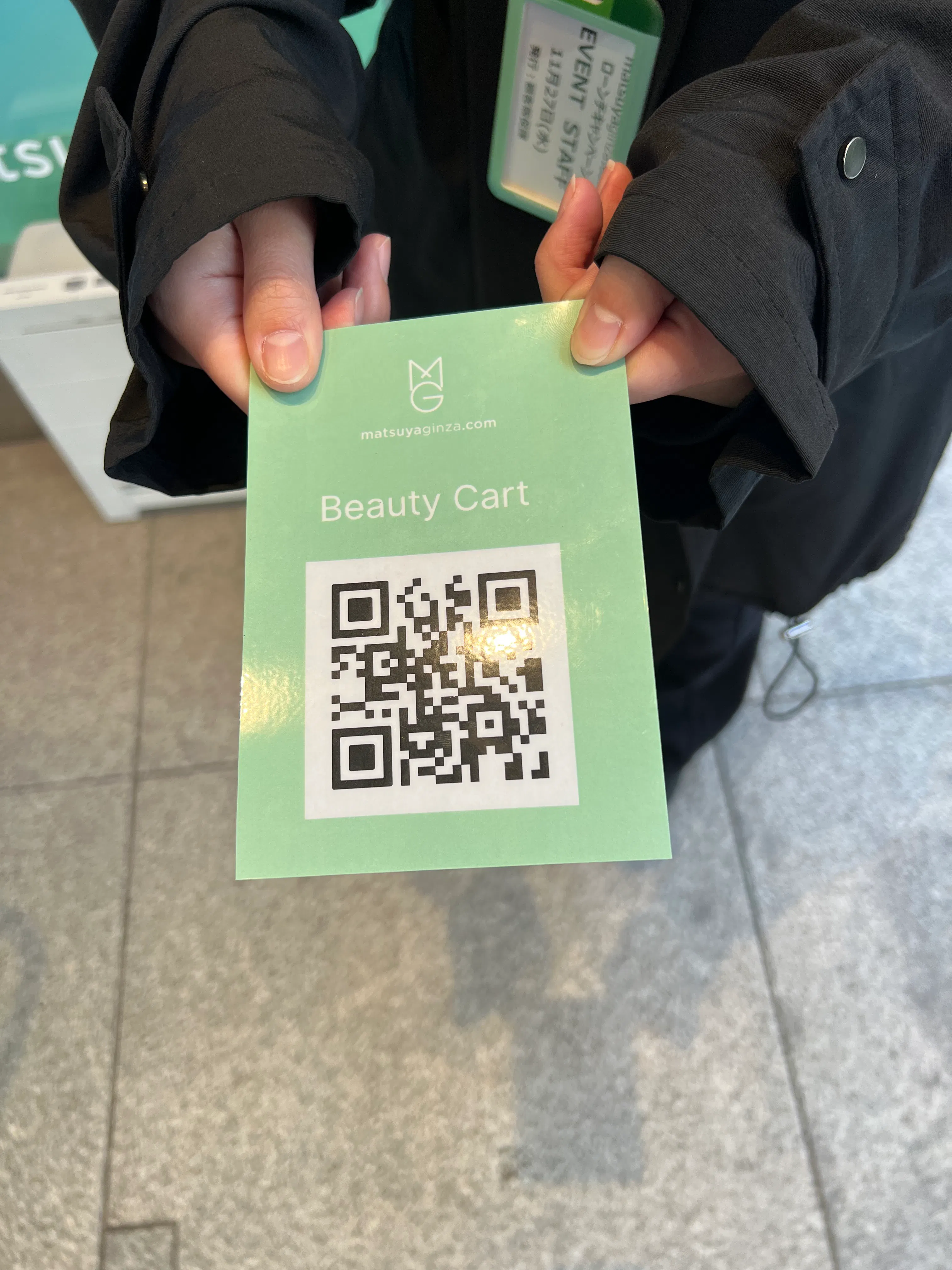
The beauty cart sat on the floor with a member of staff beside it and cosmetics samples on it. Scan the code, make an account, take something home with you. It drew 5,741 scans over the five days.
We designed the whole campaign on that pairing and it is the part worth repeating: a screen earns attention, a physical reward converts it. Every activation ended in something material, a sample, a gift, or entry into a draw for coupons worth up to 10,000 yen. Digital experiences bring people in and give them a reason to stay; goods they can hold are what makes signing up feel worth thirty seconds at a counter. That is not a new idea in retail, but it is easy to forget when the brief arrives with the word "digital" in it.
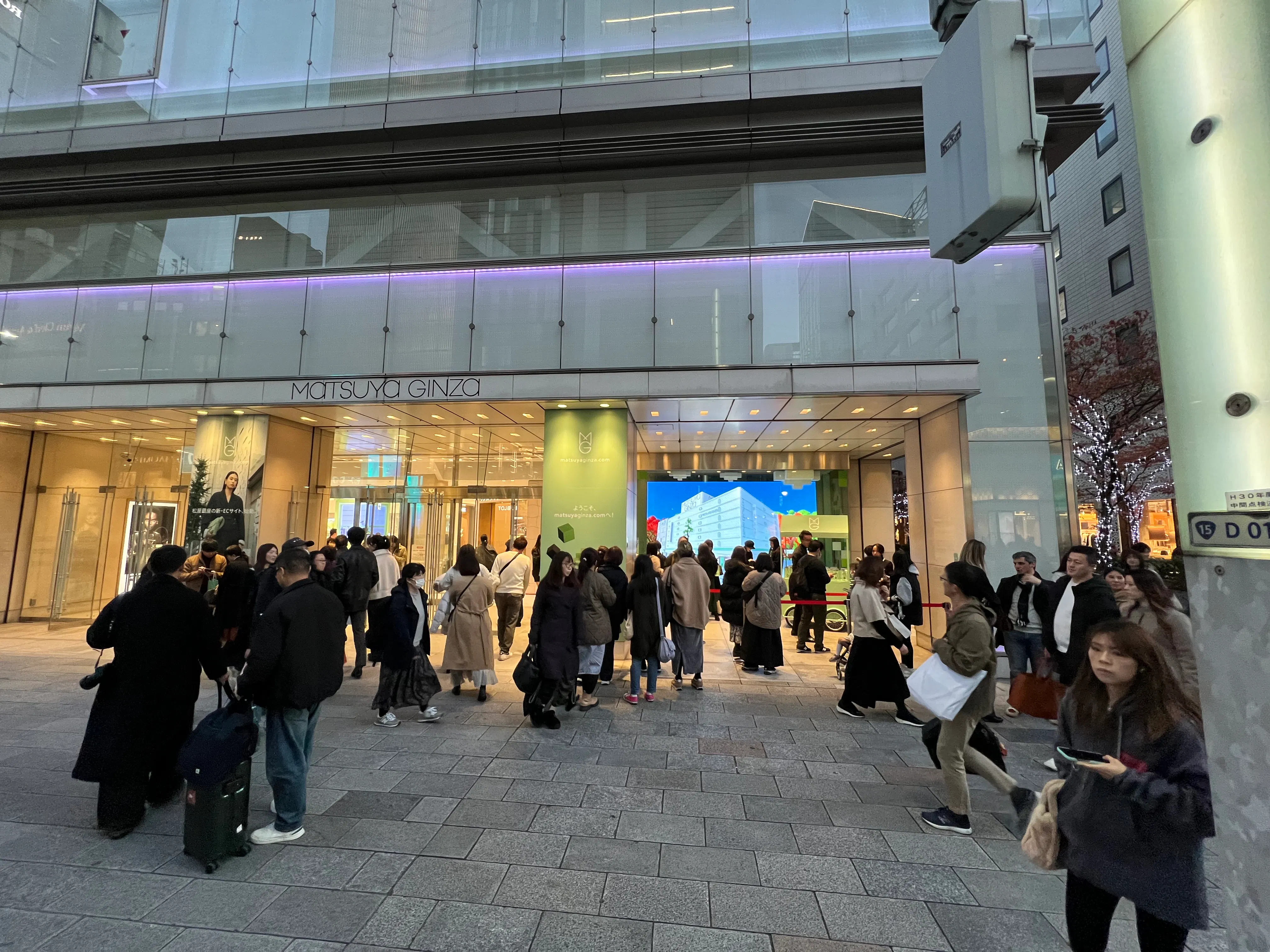
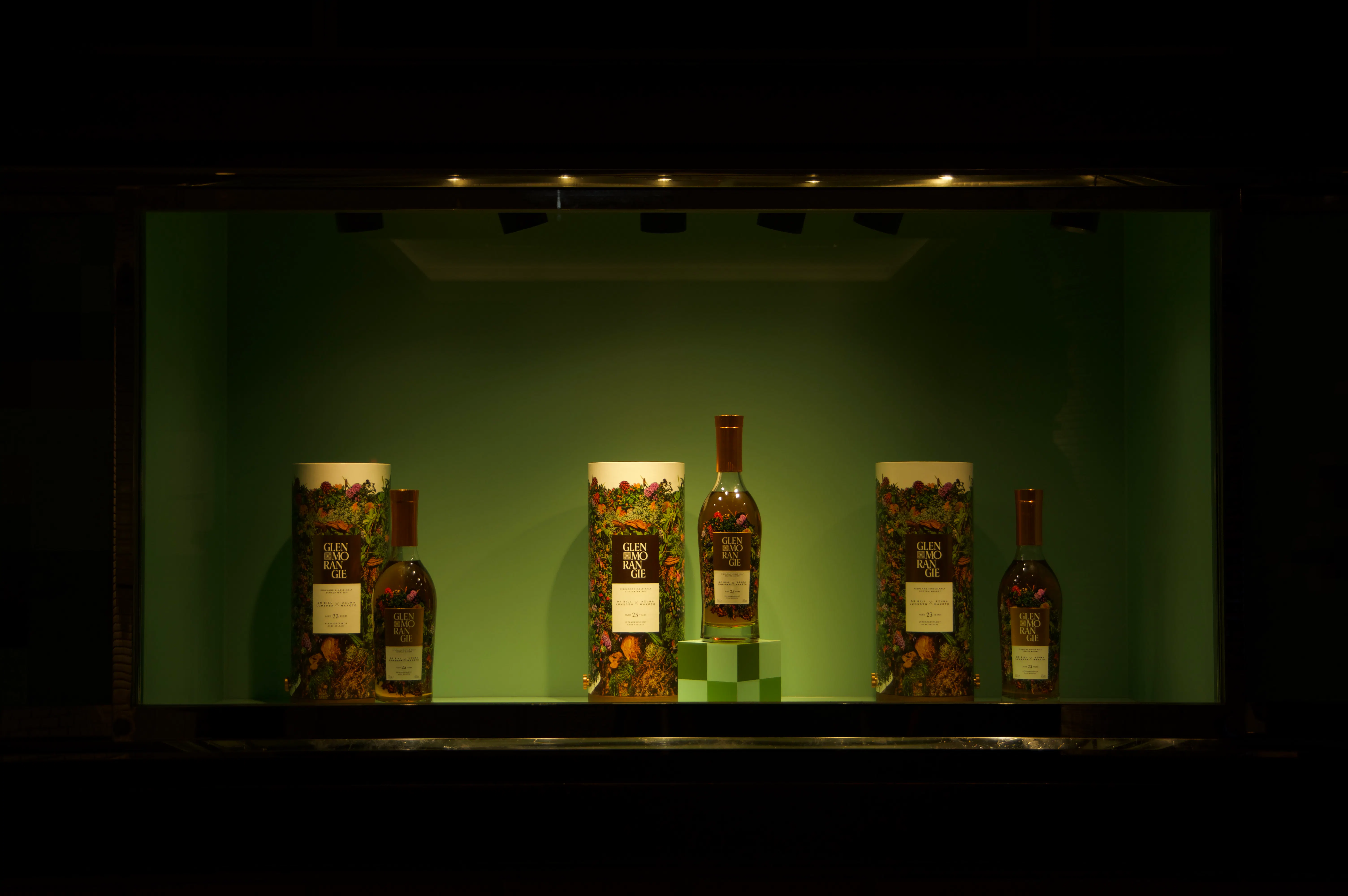
We produced the physical campaign as well as the digital one: the 1F display window with its LED wall, pixel clouds hung from the ceiling and a coloured floor; the pop-up store with its green pillar, LED screen, decoration cubes and the custom gatcha machine; the B1F windows by the subway entrance, including the partner-brand window built for Tom Ford, La Mer, Louboutin, Ferragamo, Roger Vivier, Stella McCartney, Miller Harris and Glenmorangie.
Creative direction, media, software, fabrication and installation came from one team on one schedule. For a retail client working to a fixed opening date in the busiest weeks of the year, that is the difference between approving one plan and coordinating five suppliers through a night install.
On 22 December, Matsuya Ginza brought the cart back for a single day at one of the store entrances and announced it in their own newsletter as 大好評, very well received, telling customers to look out for the pixelated pine tree and the green cart. Nobody asked us to make that happen.
A client repeating an element on their own initiative, three weeks after the campaign closed, is a better review than anything we could write here.
Built for Matsuya Ginza. Creative direction, experience and user journey design, all digital experiences and web development, media creation, real-time device synchronisation, and the design, fabrication and installation of the physical activations by Gimbal Cube, with tight integration into the e-commerce website. Venue: Matsuya Ginza main store, 1F and B1F.
Signups on matsuyaginza.com over the five-day launch campaign.
The pixel pine mobile game, played in the browser.
Across the campaign pages on matsuyaginza.com.
One activation, one member of staff, five days.
Our team is based in the US, Europe and Asia, with hubs in Los Angeles, Paris and Tokyo.
Also, we travel.